How to navigate “Brain Food/ Crunch & Sip” with your ARFID child Going back to school
What is brain food/ crunch & sip
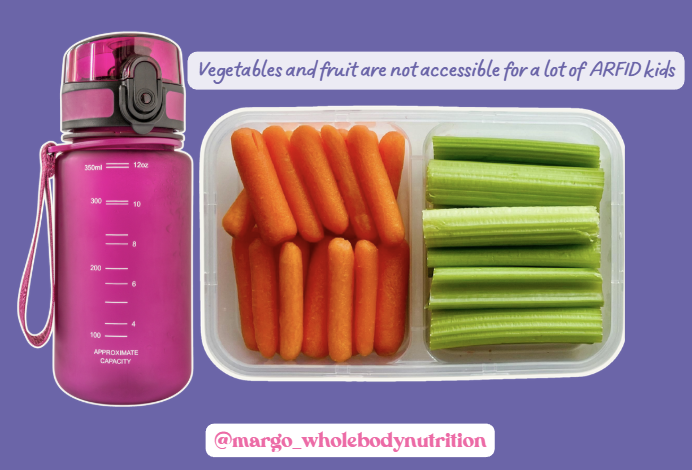
A popular Australian primary school program gives kids a set time to eat fruit or vegetables (“crunch”) and drink water (“sip”) in class.
The intention? Support hydration, “health” and concentration.
But here’s the problem 👇
The way this policy is often advertised and enforced is NOT disability, ARFID or eating differences friendly.
When schools label only certain foods as “brain food” or “good choices,” it sends powerful messages to kids:
That some foods are better than others
That eating differently is wrong
That access to regulation and learning is conditional on eating “the right foods”
We want to challenge this and say
✨ All food fuels the brain.
✨ All food supports growth, learning, and health.
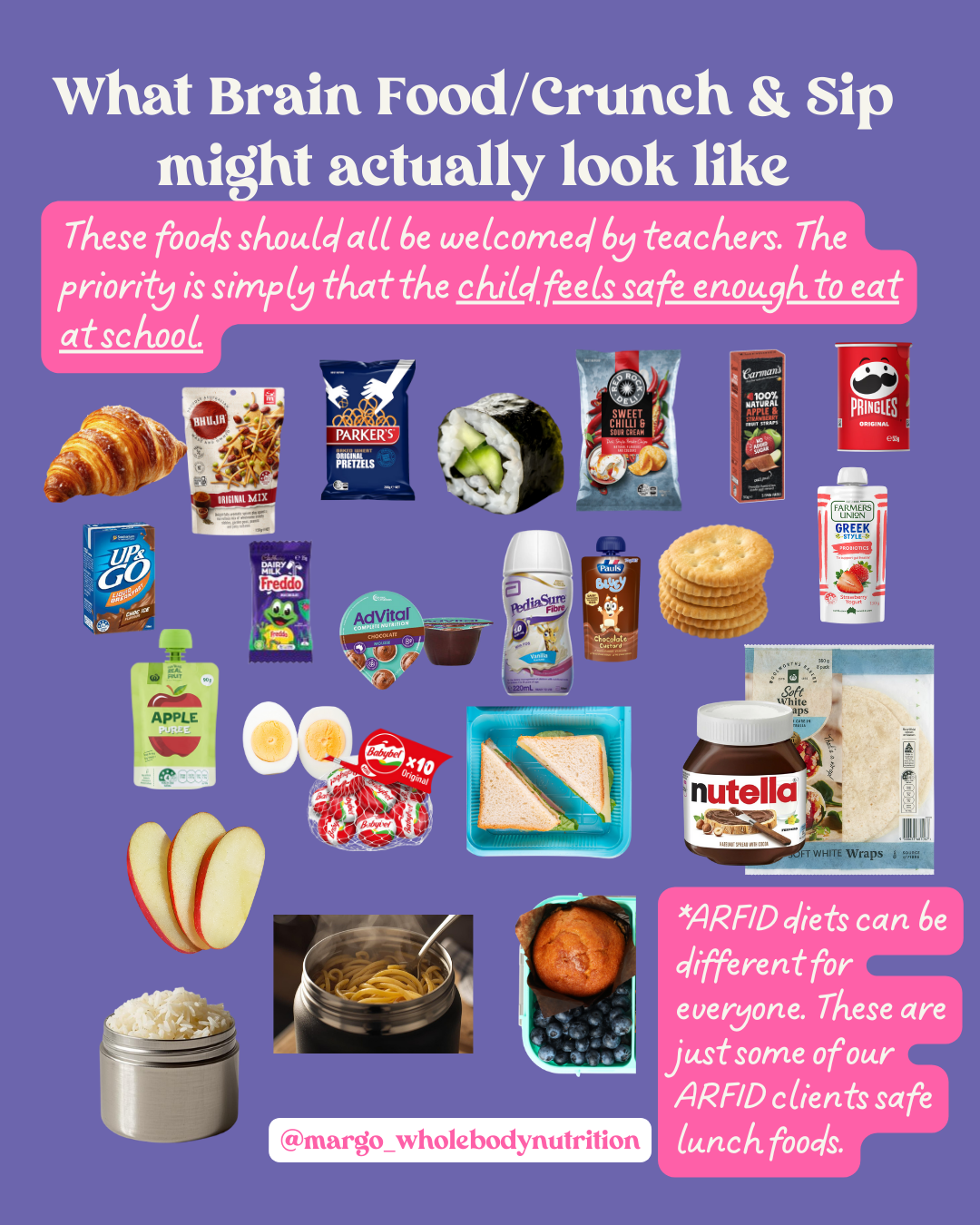
✨ And some kids need different foods, textures, temperatures, or timing to feel safe and regulated.
If your child has ARFID, sensory feeding differences, food trauma, or medical needs, you absolutely can:
✔️ challenge rigid food rules
✔️ ask for accommodations
✔️ request language that is inclusive and non-shaming
Use this script
“My child has ARFID/sensory differences which makes eating certain foods and eating in certain environments more difficult.
Our child can’t eat any fruits or vegetables, so we will be packing ( insert safe food) for brain food/crunch & sip.
Eating the same foods allows XXX to feel safe, comforted and regulated. XXX safe foods meet their sensory needs and thus it is important we allow them access to these foods.
We understand that some of XXX eating behaviours may seem strange or different. We are working hard to support XXX relationship with food and overall health. We thank you for your understanding and for supporting XXX.”
Brain Food/Crunch & Sip can be a regulation support, not a nutrition lesson and not a moral judgment.
What kids really need to learn?
That their needs matter.
That eating at school can feel safe when accommodated.
That they can trust their own body and it’s sensory needs.
That difference is okay and needed.
That food is neutral. Not good or bad, not a reward or a failure.
That eating is about nourishment, regulation, safety, and support - not compliance or control.
Written by Margo White, your Melbourne-based neurodiversity affirming clinical nutritionist and Neurodivergent advocate.
This article is intended as general advice only and does not replace medical advice. It is recommended that you seek personalised advice specific to your individual needs.