When Cooking Feels Impossible: Low-Spoon Food Ideas for AuDHDers

Sometimes the biggest barrier to feeding yourself or your family isn't knowing how to cook.
It's having to think about everything.
What are we eating? Do we have the ingredients? What needs to be defrosted? How long will it take? What will everyone eat? Can I cope with the smells and noise? Who is going to clean up afterwards?
For neurodivergent, disabled and chronically ill people, this cognitive load can make eating feel like a much bigger task than it appears from the outside.
Let's reduce the cognitive load
One of the most useful strategies can be creating a short list of go-to meals for different levels of capacity.
When you have more capacity, write down some options for your lower-capacity days. Think about the whole task, preparation, cooking, clean-up, number of ingredients, task switching and physical effort.
2–5 minute options
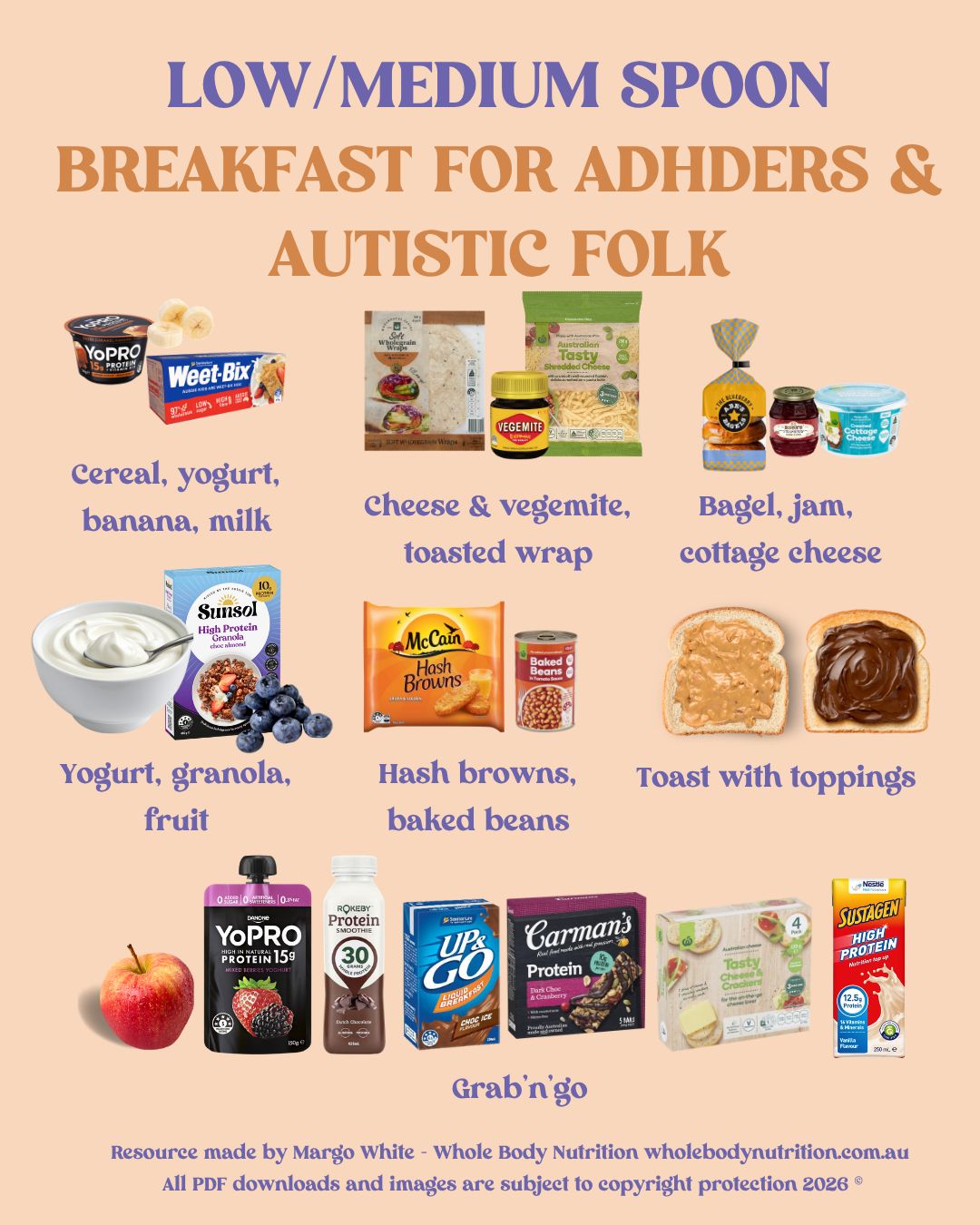
Toast with cheese or spreads
Cereal and milk
Crackers, cheese and fruit
Microwave potato + baked beans + cheese
Wraps with individual fillings
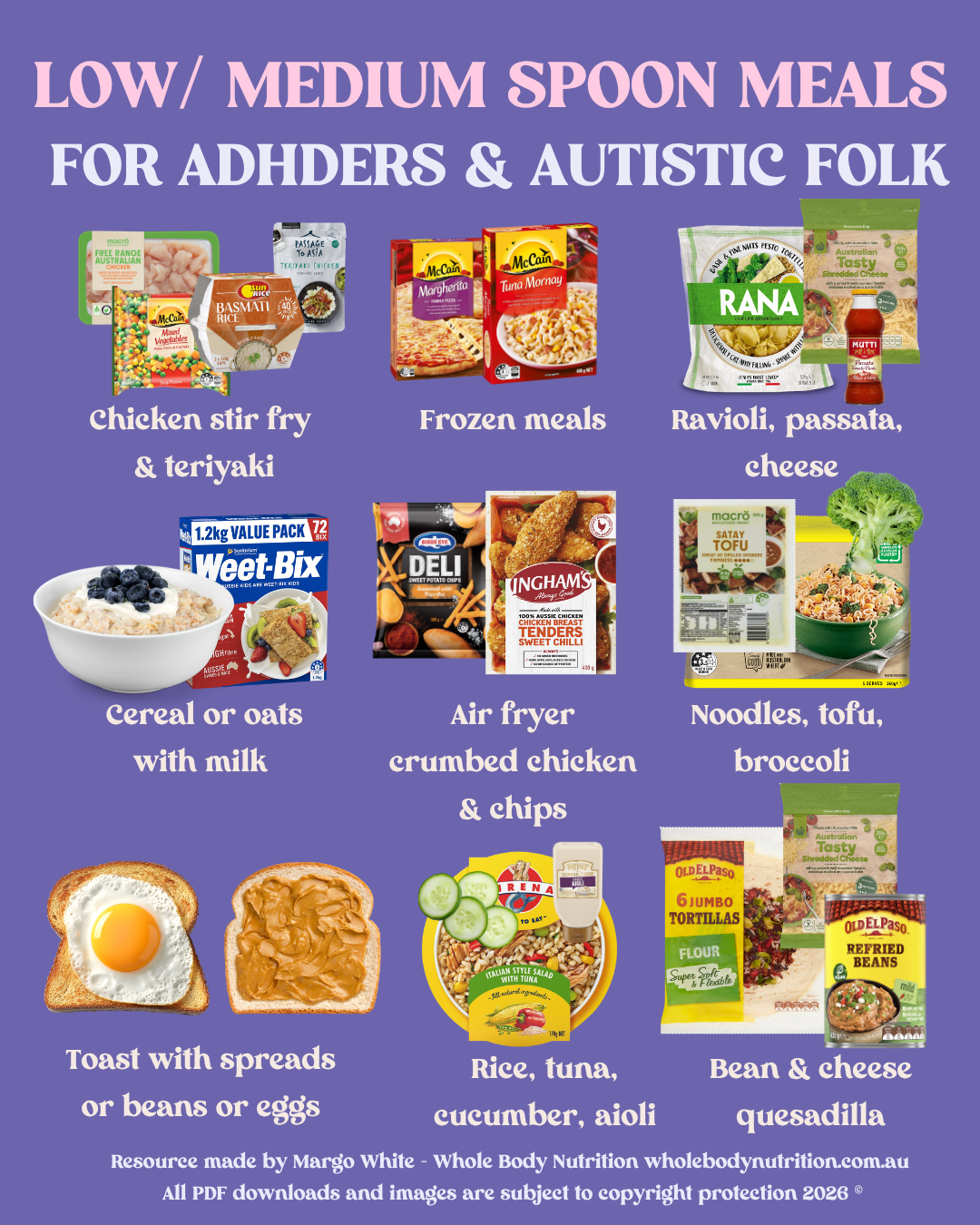
Tuna + microwave rice + cucumber + mayo
Around 10 minute options
Pasta + pre-made sauce + cheese
Eggs + toast
Microwave rice + protein
Cheese and bean quesadilla
Noodles + tofu + frozen vegetables
Higher-energy options
Bolognese
Meatballs
Slow-cooker meals
Casseroles or chilli
Soup
And sometimes the lowest-energy option is outsourcing the meal. Takeaway, ready-made meals and packaged foods are all legitimate ways of getting fed.
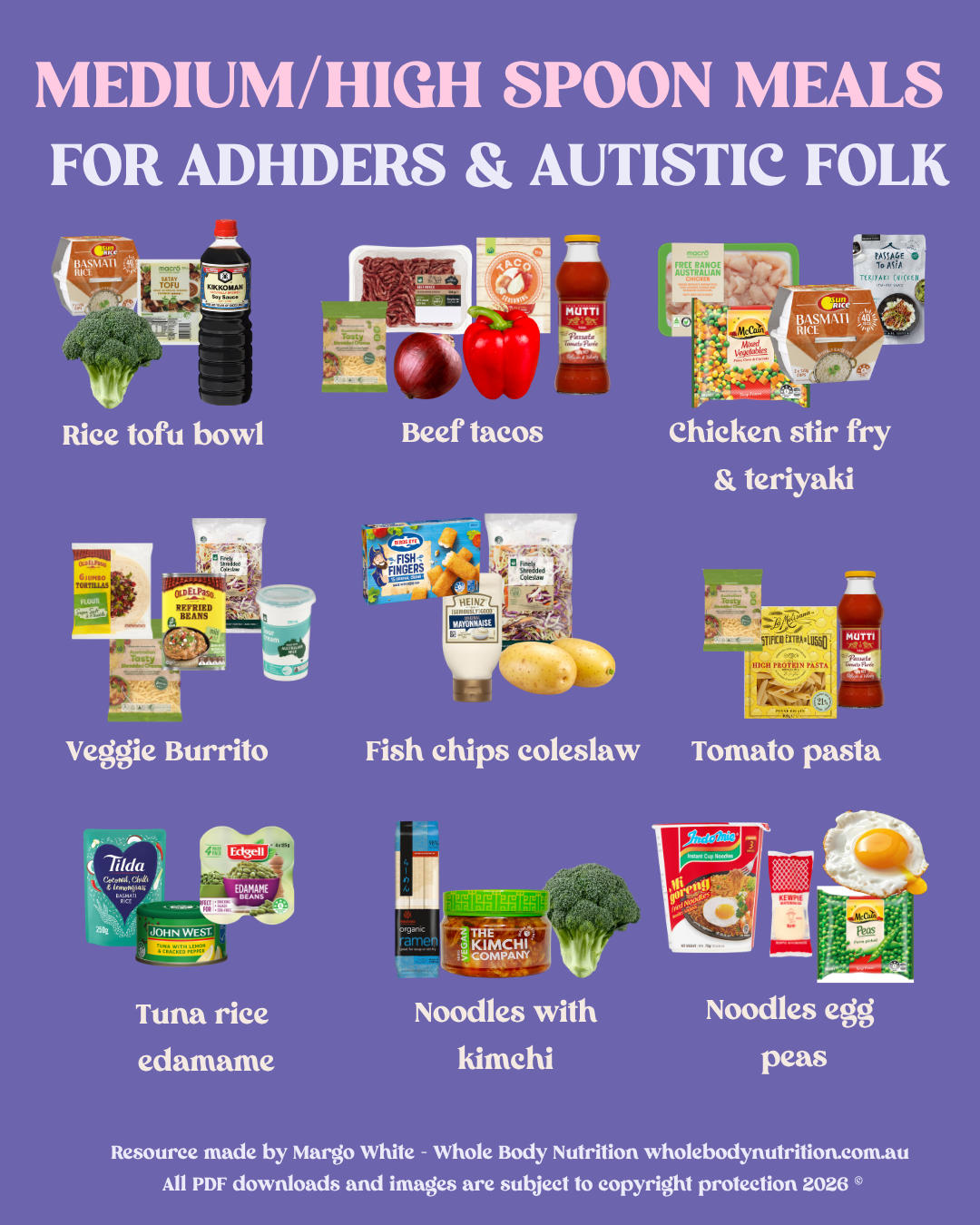
Make eating easier, not harder
You can also reduce the executive-function demands around food by:
Keeping a visual list of what's in the freezer
Using reusable grocery lists
Pairing tasks with existing routines, such as taking supplements after brushing your teeth
Using body doubling if having someone nearby helps with initiation
Listening to music while cooking if it helps with sensory overwhelm
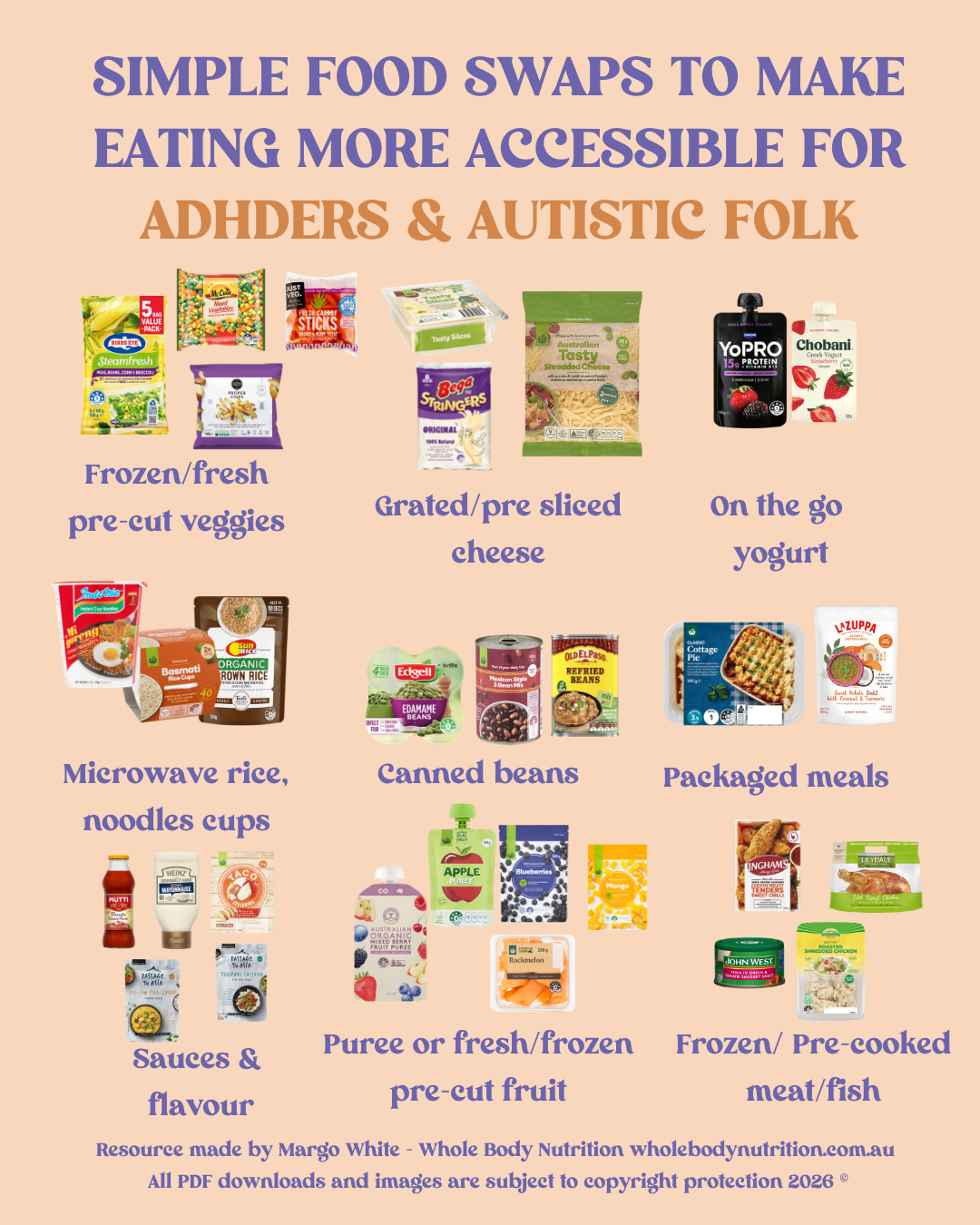
Keeping pre-cut, frozen, canned and microwaveable foods available
Eating somewhere that feels comfortable and safe
Changing the environment, dimmer lights, headphones or fewer smells
Using modular or "base + add-on" meals so everyone can customise their food
Spoon Theory
Spoon theory is a way of describing limited mental and physical energy.
Think of each task as costing a certain number of “spoons.” People with chronic illness, disability, ADHD, autism may start the day with fewer spoons, and everyday tasks can use them up quickly.
Low-spoons days are not just “tired days.”
They can include:
Executive dysfunction
Sensory overload
Burnout
Need for autonomy
Nervous system overwhelm
Emotional depletion
Physical exhaustion
On these days the goal is: Being fed - in whatever way works for you.
Your capacity can change from day to day, and your food needs to be able to change with it.
Fed is best
The goal isn't to eat perfectly.
The goal is to eat enough.
Some days nourishment might look like a meal cooked from scratch. Other days it might be toast, cereal, frozen nuggets, a ready-made meal, a meal replacement or Uber Eats.
These aren't failures or shortcuts. They're accommodations that help you work with your brain and body rather than constantly fighting against them.
Instead of asking, "What am I feeling pressured to eat?", try asking:
"What can I manage right now?"
Maybe it's choosing a safe food. Maybe it's eating something small rather than skipping the meal. Maybe it's asking someone else to cook.
Whatever gets you fed counts.
And if you find yourself thinking, "I'm so bad at eating" or "I should be able to do this," try:
"Eating feels difficult for me today, and I'm doing the best I can with the capacity I have."
Food choices do not determine a person's worth, discipline or value.
Your job isn't to eat perfectly. It's to find ways of nourishing yourself that are achievable, sustainable and supportive of the life you're actually living.
Written by Margo White, your Melbourne-based neurodiversity affirming clinical nutritionist and Neurodivergent advocate.
This article is intended as general advice only and does not replace medical advice. It is recommended that you seek personalised advice specific to your individual needs.